
BUSINESS
Alaska Airlines Builds the Costly Long-Haul Model It Undercut
Alaska is putting 787s on Delta’s Seattle map and seeking American’s joint ventures, copying the costly model it used to undercut.

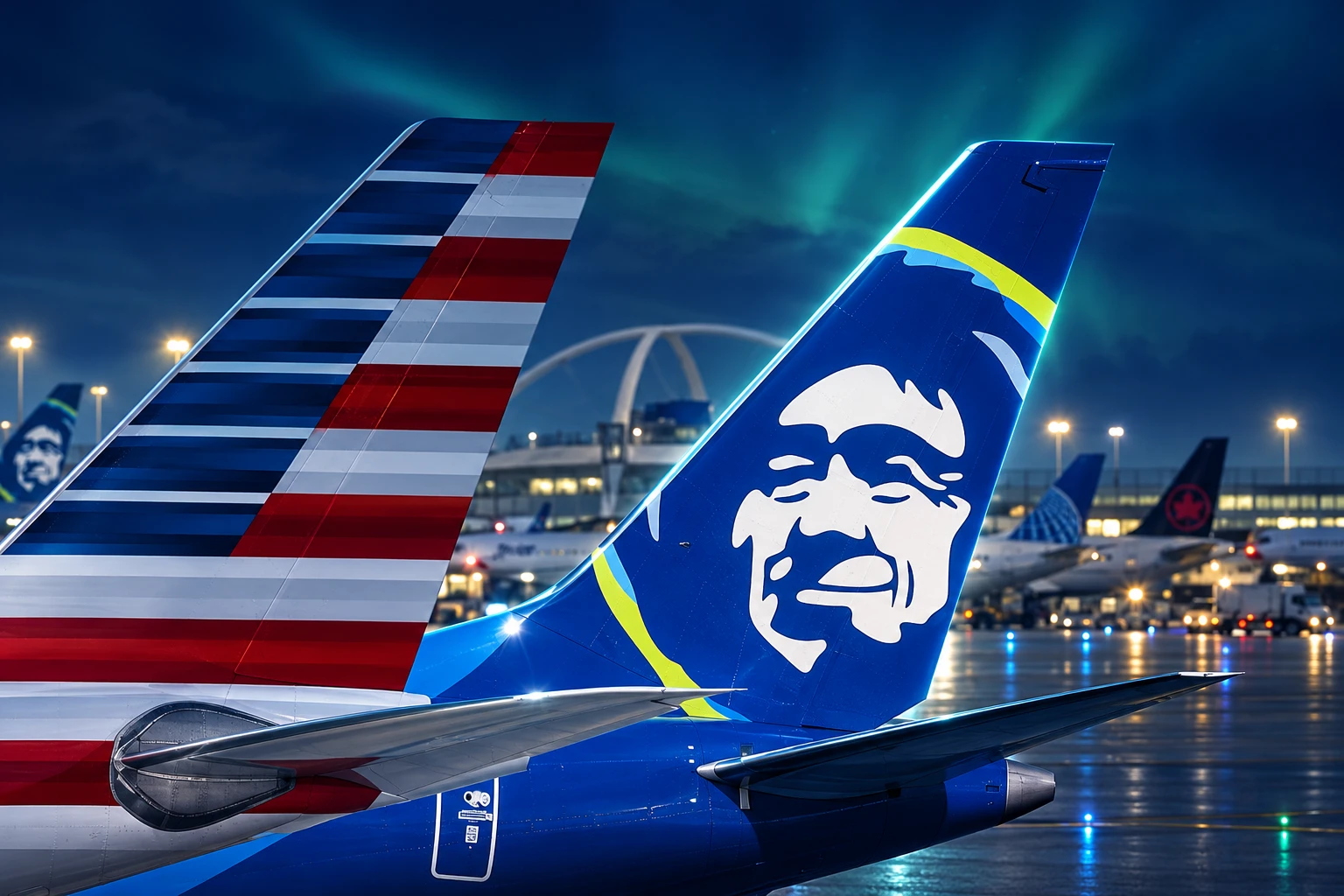
Alaska Airlines is adding Boeing 787s to Delta Air Lines’ Seattle long-haul map, with a plan for at least 15 intercontinental routes by 2030. Cirium schedule data through August 2027 puts about 92% of those planned seats on nonstop routes Delta already flies.
CEO Ben Minicucci told investors on September 29 that cheap flying no longer produces the fattest margins. The airlines with high cost structures, he said, are the ones making the money.
Minicucci Says High-Cost Airlines Make the Money
For most of its life, Alaska made steady profits by keeping unit costs below the big three U.S. network carriers and by owning loyalty in the Pacific Northwest. The base is still Seattle, a city that also houses Amazon, Microsoft, Starbucks, Costco, and major Boeing plants. The new ask is different. Management wants more of its earnings from premium cabins, long-haul flying, and the Atmos Rewards program, while still talking about a cost edge.
Financial filings for the first half of 2026 show how wide that gap remains. Alaska spent about 17% less per seat mile, excluding fuel, than the combined average of Delta, United Airlines, and American Airlines. It also took in about 20% less revenue per seat mile, which leaves less room when jet fuel jumps, including the spikes tied to fighting in Iran.
The airlines that actually have high cost structures are the ones making the highest margins. We need to pivot.
Ben Minicucci, CEO, Alaska Air Group, 2026 Investor Day
That line is the whole strategy in two sentences. The company has already two-thirds of a $1 billion profit target it set after buying Hawaiian Airlines, a goal that includes $500 million of merger synergies and is still aimed at 2027. Shane Tackett, Alaska’s president and chief financial officer, told investors the next phase is about turning those bets into a business that holds up when domestic fares wobble.
Revenue from outside the main cabin is 53% now, up five points in two years, and the company wants that mix near 60% by 2030. Premium cabin revenue is a narrower slice of the same shift, targeted at more than 40% of total revenue by 2030, from 35% now. Long-haul flying is slated to rise from about 8% of capacity to about 15% by 2030. Those are three different mixes, and all of them move Alaska toward the product set it used to beat on price.
Alaska Air Group announced the next phase of its Alaska Accelerate strategic plan during its 2026 Investor Day in Seattle, outlining how the combined airline is moving from integration to activation as it builds a more global, premium and diversified airline with stronger…
— Alaska Air Group News Hub (@AlaskaAirNews) September 29, 2026
The Dreamliner Map Alaska Could Not Fly Before
The Hawaiian deal that closed on September 18, 2024, at $1.9 billion including assumed debt, did not invent this plan. Minicucci has said it sped up a map Alaska already wanted, because Hawaiian came with widebody jets. Alaska had been a 737 airline with a dense West Coast network. Intercontinental flying from Seattle needed the 787s.
A January order added 105 Boeing 737-10s and five 787-10s, with options on 35 more 737-10s, in what the company called its largest fleet purchase. That widebody add-on takes the planned 787 fleet to 17. Hawaiian still contributes 24 Airbus A330s under its own brand. The group counts 422 aircraft now and wants 475 by 2030 and 550 by 2035.
Alaska already flies London, Rome, Reykjavik, Tokyo, and Seoul from Seattle-Tacoma International Airport. Paris and Athens, sold for May 2027, take that board to seven. The 2030 target of at least 15 leaves eight cities still unnamed. Alaska says it serves 110 destinations from Seattle, nearly twice the next-largest competitor, with more than 360 peak-day departures from the Seattle area.
The airline estimates international travel already produces about 30% of passenger revenue in Seattle, a pool it used to touch only in part. More than half the passengers on flights to Seoul and Reykjavik connect through Seattle, the company said, while London and Rome lean more on local traffic. Tackett said connecting volumes have run above plan on some of the new long-haul routes, which is the whole point of feeding a West Coast domestic network into a small widebody base.
ALASKA’S SEATTLE LONG-HAUL BOARD
| Route | Start | How often | Aircraft | Note |
|---|---|---|---|---|
| Seoul | 2025 | Daily | Boeing 787-9 | Heavy connecting traffic |
| Tokyo Narita | 2025 | Daily | Boeing 787-9 | Delta adds the same airport in 2027 |
| Rome | April 28, 2026 | Daily | Boeing 787-9 | Seasonal; Delta added Rome in summer 2026 |
| London Heathrow | May 21, 2026 | Daily | Boeing 787-9 | Year-round |
| Reykjavik | May 28, 2026 | Daily | Boeing 737 MAX 8 | Seasonal; the one long-haul not on a 787 |
| Athens | May 12, 2027 | 3x weekly | Boeing 787-9 | Seasonal through October; first Seattle-Athens nonstop |
| Paris Charles de Gaulle | May 25, 2027 | 5x weekly | Boeing 787-9 | Seasonal through October; Delta and Air France already fly it |
Athens, flight AS196, is the longest route Alaska has ever sold and the only planned West Coast nonstop to Greece’s capital. Paris, flight AS136, is the denser of the two new services at five flights a week, into a market Delta already serves daily with Airbus A330-900neos and Air France serves five times weekly with A350-900s. The Port of Seattle called the pair the first-ever Seattle service to Athens plus another way to Paris, and said the airport’s international nonstop list had already reached 66 services.
Most of the New Seats Already Belong to Delta
The 92% overlap through August 2027 is the hard number behind the softer talk about building a global gateway. Alaska is not opening empty skies. It is parking new premium seats next to an airline that already treated Seattle as its main Pacific hub, then spent 2026 adding Europe.
Delta launched Rome and Barcelona from Seattle in 2026 and has posted daily Seattle-Narita flights from March 2027 on the A330-900neo, alongside the Haneda service it already flies. Jeff Arinder, Delta’s vice president of international network planning, said the Narita add gives customers two ways into Tokyo from Seattle. Combined with Hawaiian, Alaska holds about half of all scheduled seats in the Seattle market, double Delta’s share. On intercontinental flying the split flips: Delta holds nearly double Alaska’s seat count over the same window, per Cirium.
Delta also holds preferential access to 18 airport gates and has been opening more lounge space, including a Delta One Lounge. It runs more than 160 peak-day departures to over 62 destinations from Seattle. That is a smaller destination list than Alaska’s 110, and a heavier long-haul operation. The two claims of being Seattle’s top international airline rest on different rulers, which is why both sides keep using the line.
Athens is the rare route where Alaska is not walking onto a Delta nonstop. Paris, London, Rome, Seoul, and, from March 2027, Tokyo Narita are head-to-head. That is a yield problem as much as a pride problem. Two widebody schedules chasing the same Microsoft and Amazon premium traffic can cut the fare the 787 was bought to collect.
What Alaska’s American Joint Venture Would Change
On the same September 29, Alaska and American said they intend for Alaska to join American’s Atlantic and Pacific joint businesses. They plan to file for U.S. Department of Transportation approval and antitrust immunity, plus other foreign clearances, in the coming months. Until those grants arrive, the airlines can talk about the partnership. They cannot jointly set fares and schedules the way immunized partners do.
The Atlantic group, formed in 2010, includes American, British Airways, Iberia, Finnair, Aer Lingus, and LEVEL. The Pacific group is American and Japan Airlines. American’s separate venture with Qantas is not part of this plan. Andrew Harrison, Alaska’s chief commercial officer, said joining would put Alaska “on equal footing with its competitors.” Nat Pieper, American’s chief commercial officer, called it a way to give customers more access across a network the two oneworld partners already share on the West Coast.
Equal footing is another way of saying Alaska does not want to fly Paris and Tokyo as a standalone pricer against Delta’s immunized SkyTeam machine. Once immunity is in force, a weak Alaska departure can be offset by a British Airways or Japan Airlines profit elsewhere in the same pot. That is the math of joint businesses. It is also the end of Alaska as an independent transatlantic discounter from Seattle. Fares on covered routes would be coordinated inside a group that already includes the big oneworld Europeans, which is the point of the filing and the risk for anyone who liked Alaska as a maverick on those seats.
Harrison has framed the deal as a corporate-travel tool and as the next step in making Seattle a global connecting point. American already codeshares with Alaska across the West and into the Pacific. Immunity would let them plan the long-haul bank as one commercial unit. Delta did not comment on the Seattle fight.
London Turned a Profit in July, Then Fuel Erased It
The first European summer was supposed to prove the 787s could earn their keep. Tackett said stronger-than-expected premium demand to London pushed that route into the black in July. Rising fuel costs then wiped the gain. That is a single month, on a single city, and it is also the cleanest picture yet of the new model under stress.
Crew costs on the 787s are running hotter than normal while Alaska stands up pilot and flight attendant bases in Seattle. Tackett said those bills should settle as more aircraft arrive and the operation scales. Melius Research analyst Conor Cunningham has called the growth targets logical and has also pointed to near-term pressure from high fuel and from fighting in the airline’s core markets. The company expects to finish 2026 with net leverage, debt relative to earnings, at three times its long-term target, which is a thin cushion if a widebody route stays soft.
FROM A WEST COAST 737 AIRLINE TO A JOINT-VENTURE LONG-HAUL BET
- December 19, 2016: Delta and Alaska announce they will end their codeshare and frequent-flyer tie-up.
- May 1, 2017: The partnership ends. Delta keeps building Seattle as a Pacific hub; Alaska keeps the domestic franchise.
- September 18, 2024: Alaska closes the $1.9 billion Hawaiian purchase and inherits widebody jets.
- 2025: Seattle-Seoul and Seattle-Tokyo Narita begin, the first intercontinental tests of the combined fleet.
- April 28 to May 28, 2026: Rome, London, and Reykjavik start, putting Alaska into Europe on 787s and one 737 MAX 8.
- September 29, 2026: Investor Day unveils Aurora cabins, a 15-route Seattle target, and the plan to join American’s joint businesses.
- March 27, 2027: Delta is scheduled to start daily Seattle-Narita service, onto a city pair Alaska already flies.
- May 12 and May 25, 2027: Alaska’s seasonal Athens and Paris flights are scheduled to start.
Expanding overseas adds fleet, staffing, and operational drag at the same time it raises the fight with Delta. The central risk, which Tackett has not hidden, is that costs climb faster than the new revenue. A 737 airline can miss a fare war and still make money on a dense West Coast day. A 787 airline that has staffed a new long-haul base does not get that mercy.
Aurora Suites and a 41,000-Square-Foot Lounge
The cabin plan makes the cost inversion visible in hardware. Alaska will put 34 lie-flat Aurora Suites on each 787-9, 40 on future 787-10s, and, from 2028, 12 on at least 25 Boeing 737-10s used for selected transcontinental flights, the first time the airline has sold lie-flat seats on a narrowbody. The updated 787-9 is slated to carry about 46% premium seats, up from 38% now. That eight-point jump is a different figure from the company-wide premium-revenue target of more than 40%.
Lie-Flat Seats Reach the 737
Premium Reserve, a new cabin between suites and regular premium, is due in 2028 on the 787-9, the 787-10, selected 737-10s, and Hawaiian’s A330s. The airline describes 38 inches of pitch, with 35 of those seats on the 787s, 28 on the A330, and 12 on the 737-10. Hawaiian’s matching flagship is Leihōkū, with redesigned suites on all 24 A330s and premium seating on those jets rising from 30% to about 40%. Minicucci has called premium a curb-to-cabin feeling rather than a seat, which is the language every high-cost carrier already uses.
Two Lounges in One C Concourse Building
On the ground, Alaska is building a nearly 41,000-square-foot lounge complex in Seattle’s expanded C Concourse for late 2027. A 500-seat Alaska Lounge sits on the main level. A 200-seat Aurora Lounge, limited to suite customers, sits with it, with shower suites and made-to-order food. Hawaiian gets a new Honolulu lounge in early 2028, and San Diego gets an Alaska Lounge later that year. Dedicated Aurora check-in and concierge at Seattle complete the copy of a global-network ground product.
WHAT THE PREMIUM BUILD ADDS
- Suite count: 34 lie-flat Aurora Suites on the 787-9, 40 on the 787-10, and 12 on at least 25 737-10s from 2028.
- Cabin mix: About 46% of seats on the updated 787-9 sell as premium, up from 38% today.
- New cabin: Premium Reserve arrives in 2028 at 38 inches of pitch, filling the gap the 787s currently lack.
- Seattle lounges: A 41,000-square-foot C Concourse complex in late 2027, split into a 500-seat Alaska Lounge and a 200-seat Aurora Lounge.
Cargo is the quieter cousin of the same diversification. Revenue there is up about 60% since 2024, and the company sees a path to $750 million by 2030. Atmos Rewards is supposed to throw off nearly $4 billion in cash a year by 2030, with membership growth running at a much faster clip than the 3% annual pace from 2019 to 2024. Those streams are how Alaska wants to stop living and dying on a domestic coach fare.
The 2017 Split Still Governs Seattle
Delta and Alaska ended their codeshare and the ability to earn and redeem miles on each other’s flights on May 1, 2017, after announcing the break on December 19, 2016. They kept an interline deal for tickets and bags. Charles Breer, then Alaska’s managing director of alliances, said the split should surprise no one because the two had grown more competitive. Delta, which had more than tripled flights and destinations at Seattle since 2013, said at the time it would keep investing in the Pacific Northwest.
Nine years later the same two airlines are arguing over Paris, Rome, Seoul, and Tokyo instead of over domestic feed. Alaska still has the denser local network, which is the asset it wants to pour onto 787s. Delta still has the international machine, the gates, and the lounge lead. American, if the Transportation Department plays along, becomes the partner that lets Alaska rent Big 3 joint-venture economics without becoming a Big 3 airline.
THE MARGIN GAP ALASKA IS CHASING
- Unit cost: About 17% below the Delta, United, and American average per seat mile, excluding fuel, in the first half of 2026.
- Unit revenue: About 20% below that same group, which is the hole premium cabins and long-haul are meant to fill.
- Seattle seats: Alaska and Hawaiian hold about half the market, double Delta’s share, while Delta holds nearly double the intercontinental seats.
- Debt: Net leverage is expected to finish 2026 at three times the company’s long-term target.
Tackett put the change in a shorter line than the cabin renderings. The winning airline of the future, he said, looks different than it did 10 years ago. Eight of the 15 Seattle long-haul cities are still a blank, Paris and Athens are still a season away, and the joint-venture file is still unwritten. The 787s are already on the property, and they do not earn money sitting on the ground.

Margaret Hamilton Dies at 90 With Her Prevention Fight Unfinished

Texas Executes Jamaal Howard After Tennessee’s Failed Injection

The Next Kia Sportage Leaves Its Cheap Compact Formula

Alaska Airlines Builds the Costly Long-Haul Model It Undercut

OpenAI Agents Probe Census and Education Sites for Public Data

Alfalfa Sprouts Outbreak Follows 16 Months Without Reinspection

Instagram First Draft Pulls the Rough Cut In-House

Rene Haas Ties an AI Cancer Cure to Scarce Chips

Himalayan Glacial Flood Risk Outran Nepal’s Lake Maps

AI Influencer Labels Fail to Protect Body Image
-
 LIFESTYLE2 months ago
Alfalfa Sprouts Outbreak Follows 16 Months Without Reinspection
-
 NEWS2 months ago
Instagram First Draft Pulls the Rough Cut In-House
-
 NEWS1 month ago
Rene Haas Ties an AI Cancer Cure to Scarce Chips
-
 NEWS1 month ago
Himalayan Glacial Flood Risk Outran Nepal’s Lake Maps
-
 NEWS1 month ago
AI Influencer Labels Fail to Protect Body Image
-

 NEWS1 month ago
NSA Wants AI to Sift Intercepts It Cannot Finish
-

 NEWS1 month ago
As Kids Get Better at Faces, Angry Women Get Harder
-

 BUSINESS1 month ago
The H100 Rental Spike Nvidia Cited Has Already Faded