
BUSINESS
Europe’s Two-Year Unicorns Are Starving the Seed Round
Antler’s 10 September 2026 study finds 33 two-year European unicorns, while Seed-to-Series A conversion is 9.3 percent and the $2.74 billion fix is 10 percent.

A 10 September 2026 Antler study of 209 European unicorns finds 33 rocketship companies reached a $1 billion valuation in two years, while Seed-to-Series A conversion fell to 9.3 percent.
The same boom that cut the unicorn clock from 7.2 years to two years has also thinned the cheques that used to carry ordinary Seed companies to Series A. Putting that conversion rate back to 23.3 percent would cost $2.74 billion, equal to 10 percent of the money those rocketships have already raised.
Thirty-Three Rocketships in Six Years
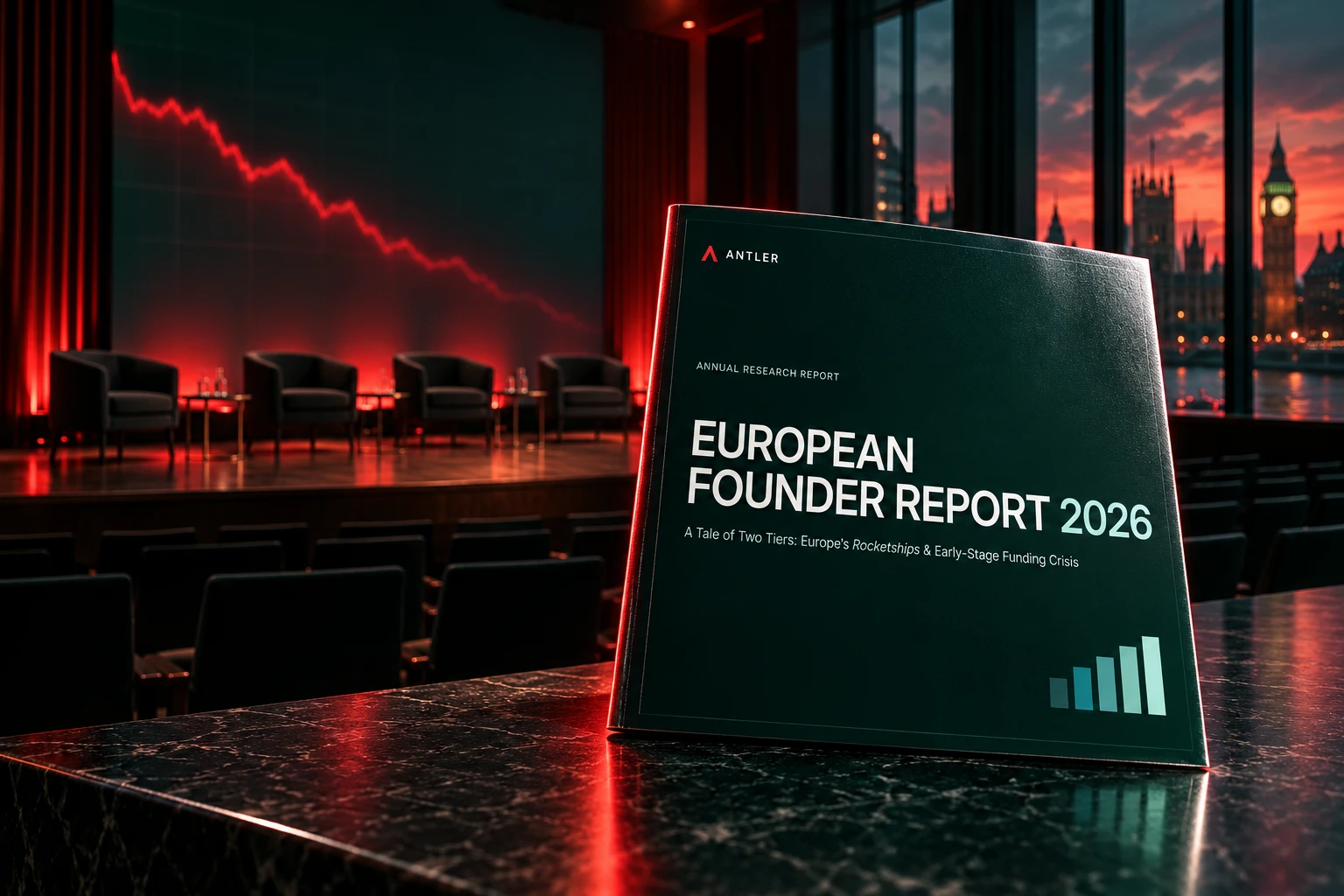
Global VC firm Antler released the work at its European Founder Conference in London, drawing on 209 European unicorns since 2000, 551 unicorn founders, 4,129 Series A founders, and 81,055 funding rounds. Rocketships, in this study, are tech companies founded since 2020 that have already crossed a $1 billion valuation.
Pre-2020 European unicorns took 7.2 years on average to get there. The new cohort does it in two. They add more US tier-1 funds earlier, pack more firms onto the cap table, and raise far larger Seed and Series A rounds than Europe used to see.
The count itself has been compounding. Antler’s January 2026 update, covering the close of 2025, put the group at 21 companies that had raised over $10 billion since 2020, after seven names arrived in the last four months of 2025, a 50 percent jump from the 14 it had counted in September 2025. The September 2026 study lifts that tally to 33.
HOW THE ROCKETSHIP COUNT MOVED
- September 2025: Antler counts 14 European rocketship unicorns in its Era of Execution research.
- End of 2025: Seven more names take the total to 21, including Black Forest Labs, Legora, and Nscale, and that group has raised over $10 billion since 2020.
- 10 September 2026: The Two Tiers study puts the living total at 33 companies founded since 2020.
Speed is still tightening at the young end. In the January 2026 update, the then-21 names averaged 2.2 years to $1 billion, and companies founded after 2023 were doing it in 1.7 years. Sixty-one percent of that rocketship set were AI companies, and every founder of a rocketship started in the prior two years had a technical background, against 27 percent of European unicorn founders before 2020. The new study puts the technical share at 77 percent of all European unicorns founded since 2022.
Jets Run Lean, Juggernauts Raise Giant Seeds
Antler splits the 33 into two types. Jets are lean software firms that scale revenue with relatively little cash, with Stockholm’s Lovable and Legora as the examples. Juggernauts are cash-heavy deep-tech firms in defence, energy, and frontier labs, with AMI Labs, Ineffable Intelligence, and Fuse Energy named in the pack.
Lovable, the vibe-coding product from Anton Osika and Fabian Hedin, raised $400 million at $13.3 billion in a Series C led by Menlo Ventures and co-led by the EQT-managed Scaleup Europe Fund, and said it was tracking toward a $600 million revenue run rate by the end of August 2026. Users have built more than 60 million projects on it, and apps from the platform draw more than 900 million visits a month. The company is keeping its centre of gravity in Stockholm while it adds offices in London, Boston, San Francisco, and New York.
Legora, the legal AI firm founded in 2023, raised $550 million in a Series D in March 2026 that valued it at $5.55 billion, taking total funds raised to $816 million, with more than 800 customers across 50 markets. Those two Jets look like classic software machines. The Juggernauts do not.
Ineffable Intelligence, the London lab founded by former DeepMind researcher David Silver, raised a $1.1 billion seed in April 2026 at a $5.1 billion valuation, led by Sequoia Capital and Lightspeed, with Nvidia, Google, and the British Business Bank among the backers, the bank putting in $20 million. AMI Labs, the Paris world-models lab around Yann LeCun, raised $1.03 billion in March 2026 at a $3.5 billion pre-money valuation. Fuse Energy, the London power supplier founded in 2022 by former Revolut executive Alan Chang, was valued at about $5 billion after a December 2025 round and was serving more than 300,000 households by June 2026.
A $1.1 billion seed is not a seed in the sense a 2021 founder would recognise. It is a growth cheque wearing a Seed label, and it is one reason the average Seed no longer leads anywhere.
JETS AND JUGGERNAUTS, FOUNDER BY FOUNDER
| Trait | Jets | Juggernauts |
|---|---|---|
| Named examples | Lovable, Legora | AMI Labs, Ineffable Intelligence, Fuse Energy |
| Average age at founding | 31 | 37 |
| Hold PhDs | 10 percent | 38.5 percent |
| Technical background | 71 percent | 65.9 percent |
| Prior leadership roles | 81 percent | 51.4 percent |
| Serial founders | 38 percent | 45 percent |
| Big Tech or research labs | none | 35 percent |
Jets are younger, more often already managers, and more often purely technical. Juggernauts are older, more often PhDs, and much more likely to have come out of a big lab. Serial founding is common in both, and slightly more so among the Juggernauts. The money follows those two shapes and skips almost everyone else.
London Holds 43 Percent of the Cohort
Stockholm can point to Lovable and Legora. Paris can point to AMI Labs. London still houses 43 percent of the rocketships, more than any other European city, according to the September 2026 study.
That share was not obvious a year earlier. Antler’s January 2026 update noted that only one rocketship had come out of the capital when the first Era of Execution paper landed, then recorded that five of the seven new names in the second half of 2025 were UK companies: Nscale, Isomorphic Labs, Nothing, Fuse Energy, and Verdiva Bio. At that point the UK had drawn level with France as joint home of the cohort, ahead of Germany and Sweden.
The concentration is awkward for the rest of the continent, and it is awkward for London too. The city that now holds 43 percent of the two-year unicorns is the same market where Antler’s April 2026 UK study found that only 12 percent of British seed startups ever reach Series A, after reviewing more than 41,800 UK funding rounds.
Companies that raised only from SEIS and EIS tax-break investors converted at 3.7 percent. Add one institutional co-investor or an active angel and the rate rose to 25.7 percent. A $1 million Seed from a VC with a real conversion record converted at 43.8 percent. Companies that raised $5 million or more from weaker investors converted at 0 percent. Round size, on its own, did not save them.
Why Seed-to-A Conversion Fell to 9.3 Percent
Between 2016 and 2025, pre-seed funding in Europe rose 197 percent. Series A deals rose 5 percent over the same span. Founder numbers are still going up. Deal counts are not. Since 2021, pre-seed deals have fallen 38 percent, seed deals 41 percent, and Series A deals 45 percent.
From 2008 to 2019, 23.3 percent of European startups that raised a Seed went on to raise a Series A. That rate was 13.1 percent in 2022 and 9.3 percent in 2023, under one in ten.
SEED TO SERIES A IN EUROPE
| Measure | Figure |
|---|---|
| Seed-to-A conversion, 2008 to 2019 | 23.3 percent |
| Seed-to-A conversion, 2022 | 13.1 percent |
| Seed-to-A conversion, 2023 | 9.3 percent |
| Pre-seed funding, 2016 to 2025 | up 197 percent |
| Series A deals, 2016 to 2025 | up 5 percent |
| Pre-seed deals since 2021 | down 38 percent |
| Seed deals since 2021 | down 41 percent |
| Series A deals since 2021 | down 45 percent |
A 2023 cohort at 9.3 percent can still fill in as late Series A rounds close, which is why Dealroom’s clock is worth sitting next to Antler’s. Dealroom finds about one in four reach Series A within 36 months, with a median journey of about 24 months. That is a different window and a pooled sample, not a rival count of the 2023 vintage, and even on that more generous clock most Seed companies still never graduate.
Who writes the Seed cheque matters as much as whether one exists. Dealroom’s European seed-investor cohorts show the top 5 percent converting 63 percent of their Seed companies to Series A, against 14 percent in the bottom quartile. That 4.5-times gap matches the UK finding that a modest cheque from a strong firm beats a large cheque from a weak one.
WHAT STILL PREDICTS A SERIES A
- Top-quartile Seed: Antler’s Europe-wide test flags a Seed of $2 million to $5 million as one of the two strongest conversion signals.
- A scaling-startup founder: At least one founder who already worked at a company that was scaling is the other Europe-wide signal.
- Investor quality in the UK: Crossing $1 million, keeping the same backers from pre-seed, and raising 12 to 18 months after pre-seed are the three tests in Antler’s British study.
Unicorns are grown-up early-stage companies. If nine in ten Seeds never get an A, the next rocketship class is being chosen from a thinner sheet of names, then over-funded when it finally looks like Lovable or Silver’s lab.
The 27 Startups That Should Have Converted
Antler ran the conversion variables and then looked for companies that already cleared them. It found 27 startups that raised Seed rounds in 2021 and 2022, hit the $2 million to $5 million band, had at least one founder from a scaling startup, and have still not raised a Series A. On the industry’s own tests, they should have got through. They did not.
The study’s explanation is not that Europe ran out of founders. It is that it ran out of people writing early cheques. Active investors in Europe rose until 2022, then the set making pre-seed and seed deals fell 42 percent. Series A investors fell 44.7 percent. Growth-stage investors fell 30 percent.
New money tells the same split more sharply. New investors backing early-stage startups fell 45.2 percent since 2022. New investors backing growth-stage companies fell 0.7 percent. Growth still has almost the same inflow of fresh firms. The first-check layer does not.
THE INVESTOR DROP SINCE 2022
- Pre-seed and seed: Active investors making deals down 42 percent.
- Series A: Active investors down 44.7 percent.
- Growth stage: Active investors down 30 percent.
- New early-stage firms: Down 45.2 percent, against a 0.7 percent dip for new growth-stage firms.
Dan Gray, research lead at investor network Odin, posted a passage from the Two Tiers report that puts the hole in manager supply rather than in founder quality. Europe, the report says, does not have enough fund managers, and not enough young emerging ones, at the stages where the bottleneck is worst.
In an ideal world, the funds that backed unicorns during the last cycle would grow into bigger funds to back decacorn outcomes this cycle. And they would be supplemented by a new generation of emerging fund managers entering the market with smaller funds and a barrage of angel investors who made some money during the previous cycle, willing to take early bets on unicorn-size outcomes.
Antler, European Founder Report 2026
That is the two-tier market in the GP layer. Last-cycle winners raise larger funds to chase the 33. Almost nobody new is arriving to back the next 330 Seeds. The 27 companies sit in that gap: they already looked like Series A companies, and the Series A buyers had gone.
The Fix Costs 10 Percent of Rocketship Capital
Antler’s cost to push Seed-to-A conversion back to the 23.3 percent rate of 2008 to 2019 is $2.74 billion. That is 10 percent of all funding the rocketships have raised, and the firm says it would produce an estimated 3 extra European unicorns a year.
The rocketships are real. Lovable’s run rate, Legora’s customer count, Silver’s seed, LeCun’s Paris lab, and Fuse’s household numbers are not a rounding error in an old slow Europe. They are also a vacuum. A $1.1 billion seed and a $13.3 billion software round pull partners, headlines, and follow-on dry powder toward a few cap tables. The ordinary $2 million to $5 million Seed, the one that used to convert at 23.3 percent, is the round that disappeared.
Whilst everyone chases the headline-grabbing mega funding rounds, there are fewer and fewer investors backing new startups. We are strangling a new generation of European founders when every indicator suggests they are more qualified and skilled than ever. This crisis can be fixed. And fixing it will allow investors to find unicorns and outlier founders in the process. But we need to act now.
Christoph Klink, Partner, Antler European Founder Conference, London
The 27 companies that already passed the industry’s own Series A tests are still waiting on a cheque that, on Antler’s maths, is a tenth of what the rocketships have taken in. Three extra unicorns a year is the return the study puts on writing it.

Margaret Hamilton Dies at 90 With Her Prevention Fight Unfinished

Texas Executes Jamaal Howard After Tennessee’s Failed Injection

The Next Kia Sportage Leaves Its Cheap Compact Formula

Alaska Airlines Builds the Costly Long-Haul Model It Undercut

OpenAI Agents Probe Census and Education Sites for Public Data

Alfalfa Sprouts Outbreak Follows 16 Months Without Reinspection

Instagram First Draft Pulls the Rough Cut In-House

Rene Haas Ties an AI Cancer Cure to Scarce Chips

Himalayan Glacial Flood Risk Outran Nepal’s Lake Maps

AI Influencer Labels Fail to Protect Body Image
-
 LIFESTYLE2 months ago
Alfalfa Sprouts Outbreak Follows 16 Months Without Reinspection
-
 NEWS2 months ago
Instagram First Draft Pulls the Rough Cut In-House
-
 NEWS1 month ago
Rene Haas Ties an AI Cancer Cure to Scarce Chips
-
 NEWS1 month ago
Himalayan Glacial Flood Risk Outran Nepal’s Lake Maps
-
 NEWS1 month ago
AI Influencer Labels Fail to Protect Body Image
-

 NEWS1 month ago
NSA Wants AI to Sift Intercepts It Cannot Finish
-

 NEWS1 month ago
As Kids Get Better at Faces, Angry Women Get Harder
-
 BUSINESS1 month ago
The H100 Rental Spike Nvidia Cited Has Already Faded